A Chipped Tooth Can Be Fixed Faster Than You Think
Bonding a chipped tooth is one of the quickest, most affordable ways to restore your smile — often completed in a single visit with no drilling and no anesthesia.
Here is what you need to know at a glance:
| Question | Quick Answer |
|---|---|
| What is it? | A tooth-colored composite resin applied directly to the chipped area |
| How long does it take? | 30 to 60 minutes per tooth, in one visit |
| Is it painful? | No — most cases require no anesthesia |
| How long does it last? | 3 to 10 years with proper care |
| How much does it cost? | Typically $100 to $400 per tooth |
| Is it reversible? | Yes — no enamel removal required |
A chipped tooth does more than change the way your smile looks. It can catch your lip, show up in every photo, and make you suddenly self-conscious about a tooth you never thought twice about before. The good news? For most minor to moderate chips, dental bonding offers a fast, conservative fix that preserves your natural tooth structure — no lab wait, no permanent changes to your enamel.
At Tribeca Dental Studio, we take a conservative approach to smile restoration, and we are known throughout NYC for excelling in no-prep veneers and minimally invasive cosmetic care — which means bonding is very much in our wheelhouse. I’m Dr. Nina Izhaky, a graduate of New York University College of Dentistry with years of experience helping patients in Tribeca restore chipped teeth through precise, natural-looking bonding chipped tooth treatments. This guide will walk you through everything you need to make a confident, informed decision about your smile.
Discover more about bonding chipped tooth:
Understanding the Process of Bonding Chipped Tooth Restorations
If you have never experienced a dental bonding procedure, you might wonder how a soft, putty-like material can transform into a rock-hard, natural-looking tooth in under an hour. The secret lies in modern dental materials and chemistry.
At the core of the procedure is composite resin, a highly versatile, tooth-colored plastic mixture filled with microscopic glass particles. This material is the same compound we use for natural-looking filling restorations and protecting exposed tooth roots caused by receding gums. Because it is highly moldable before it cures, we can sculpt it to perfectly replicate the natural contours, edge shapes, and subtle textures of your surrounding teeth.
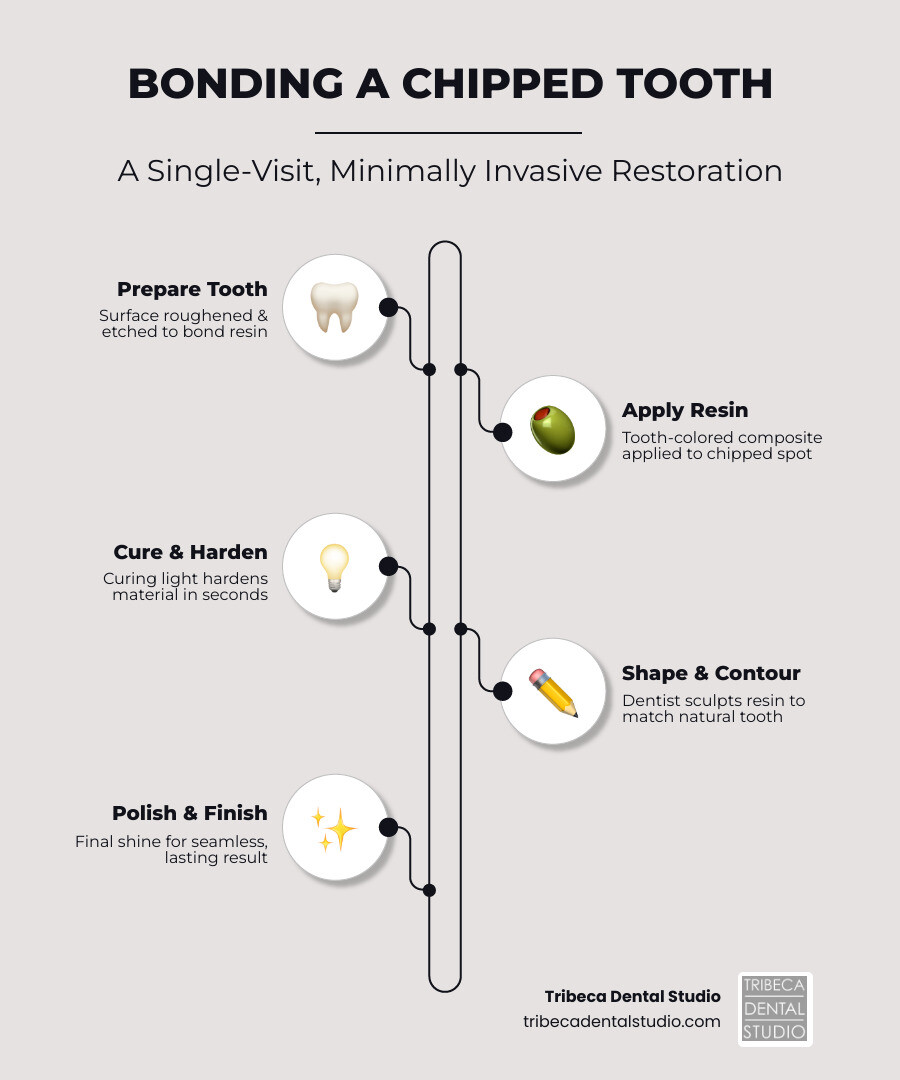
The entire procedure is highly efficient and designed to be completed in a single visit. Here is exactly what you can expect during your appointment:
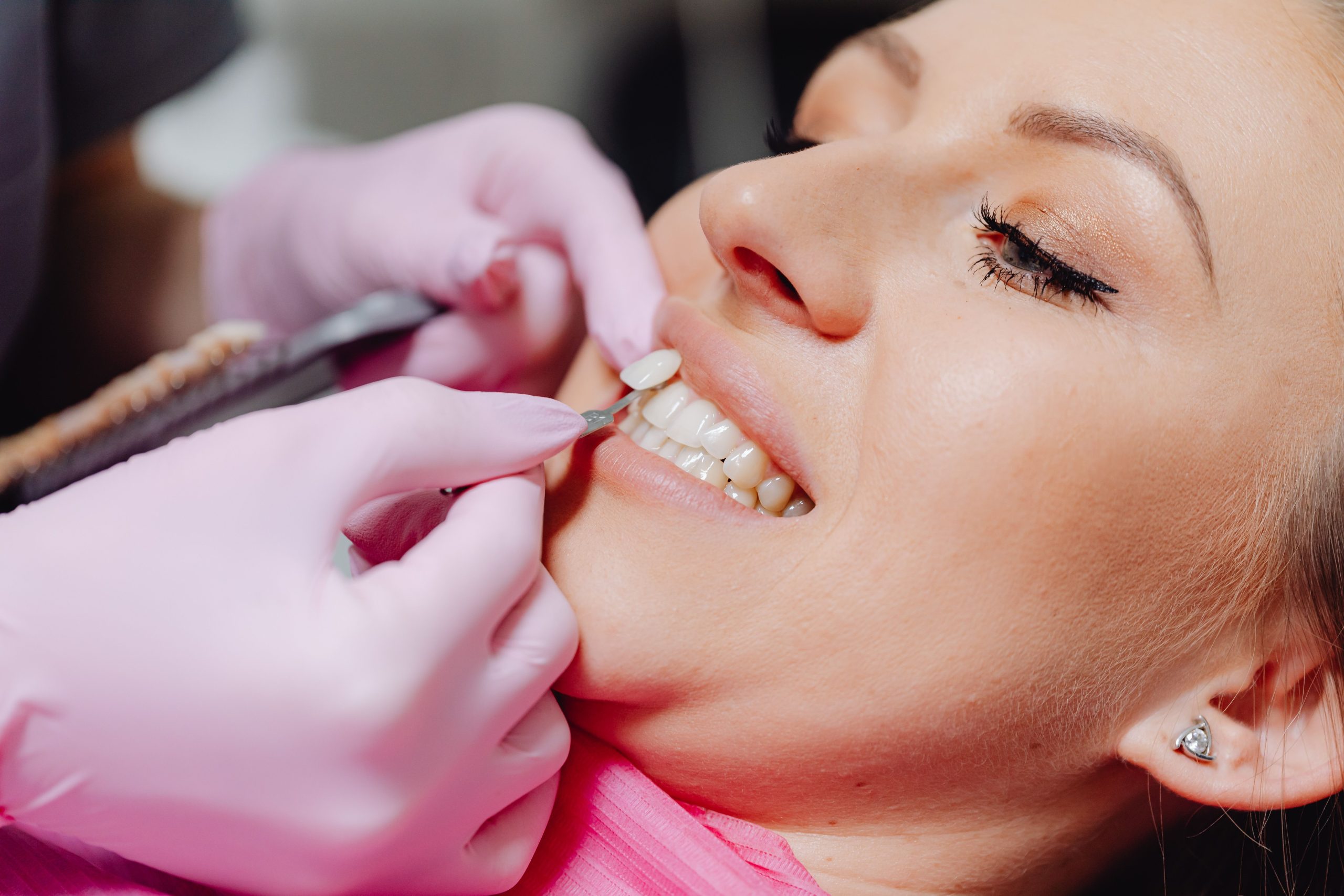
- Shade Selection: We begin by using a physical shade guide under natural lighting. This allows us to precisely match the composite resin to the exact hue, value, and translucency of your natural teeth so that the repair is completely invisible.
- Tooth Preparation: Unlike crowns or traditional veneers, bonding requires virtually no drilling or removal of healthy tooth structure. We simply clean the area and lightly roughen the surface of the enamel.
- Applying the Etching Liquid: We apply a mild conditioning liquid (usually a gentle phosphoric acid gel) to the roughened surface. This microscopic etching creates tiny pores in the enamel, ensuring the bonding agent can form a secure mechanical lock with your tooth.
- Resin Application and Sculpting: We apply a liquid bonding agent, followed by the putty-like composite resin. We meticulously build up the chipped area, layer by layer, shaping and sculpting it to match your tooth’s original anatomy.
- Curing and Hardening: Once the shape is perfect, we use a specialized high-intensity ultraviolet (UV) curing light. This light triggers a chemical reaction in the resin, hardening it in about 20 to 40 seconds.
- Polishing and Bite Adjustments: Finally, we trim away any excess material, check your bite to ensure comfort, and polish the restored tooth to a smooth, natural-looking shine that catches the light exactly like real enamel.
For a deeper look into the clinical mechanics of this treatment, you can read more about our approach to direct bonding or explore how we achieve an instant smile restoration in this article on 30-Minute Chipped Tooth Repair with Bonding.
The Pros and Cons of Dental Bonding
While bonding is an incredibly popular cosmetic solution, it is important to understand both its advantages and its limitations before moving forward. Every smile is unique, and what works perfectly for a minor chip on a front tooth might not be the best solution for a heavily fractured molar.
Advantages of Bonding Chipped Tooth Damage
The reasons so many patients in Manhattan choose bonding are simple: it is fast, highly affordable, and exceptionally gentle on your teeth.
- Exceptional Speed: A single chipped tooth can usually be repaired in just 30 to 60 minutes. It is truly a “lunch break” procedure that provides instant gratification and immediate emotional relief.
- Maximum Enamel Preservation: Because bonding adds material to your tooth rather than removing it, it is a highly conservative cosmetic treatment.
- Fully Reversible: Unlike crowns or veneers, which require permanent alterations to your natural enamel, bonding is fully reversible. If you decide to upgrade to porcelain restorations in the future, your underlying natural tooth remains intact.
- Affordability: It is widely considered the most cost-effective cosmetic dental procedure available, making it highly accessible for patients looking to restore their smiles without a massive financial investment.
To learn more about how bonding fits into the broader spectrum of restorative options, take a look at Everything You Need to Know About Chipped Tooth Repair. You can also check out this external perspective on why it is often the first line of defense: Is Bonding the Quickest Fix for a Chipped Tooth?.
Limitations and Disadvantages of the Procedure
Despite its many benefits, composite resin is not a perfect material. It does have a few physical limitations that you should keep in mind:
- Susceptibility to Staining: Unlike porcelain or natural tooth enamel, composite resin is slightly porous. Over time, it can absorb stains from dark beverages like coffee, tea, red wine, or tobacco use.
- Lower Durability: While strong, composite resin is simply not as hard as porcelain or natural enamel. It can chip or wear down over time, especially if subjected to heavy biting forces or bad habits like chewing on ice, pens, or fingernails.
- Not for Major Fractures: If a chip is large enough to compromise the structural integrity of the tooth, or if the break extends deep near the tooth’s nerve, bonding will not provide enough support. In those cases, a more robust restoration is required.
Comparing Dental Bonding to Veneers and Crowns
When deciding how to fix a chipped tooth, it helps to compare your primary options side by side. Each treatment serves a distinct clinical purpose.
| Feature | Dental Bonding | Porcelain Veneers | Dental Crowns |
|---|---|---|---|
| Primary Use | Minor chips, gaps, small cosmetic repairs | Moderate cosmetic issues, full smile makeovers | Severe structural damage, cracked or decayed teeth |
| Material | Composite resin | Dental porcelain | Porcelain, metal, or ceramic |
| Enamel Removed | None to minimal | Minimal (unless no-prep) | Significant (reshaping the entire tooth) |
| Lifespan | 3 to 10 years | 10 to 20 years | 10 to 15+ years |
| Reversibility | Fully reversible | Irreversible (typically) | Irreversible |
| Number of Visits | 1 visit | 2 to 3 visits | 2 visits |
Bonding vs. Porcelain Veneers
For patients looking for a more permanent, stain-resistant, and dramatic cosmetic transformation, porcelain veneers are often the gold standard. However, traditional veneers require a thin layer of natural enamel to be shaved down to accommodate the porcelain shells.
At Tribeca Dental Studio, we are known throughout New York City for our conservative smile-design expertise, excelling in no-prep veneers. These ultra-thin porcelain restorations allow us to deliver the long-term durability and stain resistance of porcelain without removing your natural enamel. Led by Dr. Nina Izhaky, our highly experienced team is committed to predictable, lifelike outcomes. Whether you choose bonding or no-prep veneers, we focus on preserving your natural tooth structure wherever possible.
For a detailed analysis of how these two resin-based and porcelain-based options compare, check out our guide on Composite Bonding vs Composite Veneers. You can also read more about choosing between them in this guide: Dental Bonding for Chipped Teeth: Is It Right?.
Bonding vs. Dental Crowns
While bonding simply patches a damaged area, a dental crown acts as a protective “cap” that completely covers the visible portion of the tooth. Crowns are restorative, load-bearing solutions designed for teeth that have suffered major structural damage, deep decay, or fractures that threaten the tooth’s survival.
If a chip is too large for bonding, we utilize advanced restorative dentistry techniques to craft custom dental crowns designed for long-term function and natural beauty. Our practice is fully equipped to handle comprehensive oral rehabilitation, ranging from custom crowns and deep cleaning periodontal care to advanced implant dentistry, including zygomatic implants and full-mouth reconstructions managed by our skilled specialists like Dr. Sam Morhaim.
Cost, Lifespan, and Maintenance of Bonded Teeth
How Long Does a Bonding Chipped Tooth Last?
On average, a bonding chipped tooth restoration lasts between 3 and 10 years before it needs to be touched up or replaced. Its exact lifespan depends heavily on the location of the chip, your bite alignment, and your daily lifestyle habits.
To maximize the longevity of your bonding:
- Avoid Hard Objects: Never use your teeth as tools to open packaging, and avoid chewing on ice, hard candies, or fingernails.
- Address Teeth Grinding (Bruxism): If you clench or grind your teeth at night, the immense pressure will quickly chip or wear down composite bonding. We highly recommend wearing a custom nightguard to protect both your natural teeth and your restorations.
- Maintain Excellent Oral Hygiene: Brush twice daily with a soft-bristled toothbrush and floss daily to keep the margins of the bonding clean and prevent decay from forming underneath the resin.
Cost of Bonding and Insurance Coverage
Dental bonding is one of the most affordable cosmetic procedures in dentistry. The cost typically ranges from $100 to $400 per tooth, depending on the complexity of the chip and the amount of resin required.
Whether your dental insurance covers the procedure usually depends on how the treatment is classified:
- Restorative (Covered): If the bonding is medically necessary to repair structural damage from an accident, trauma, or decay, insurance will often cover 50% to 80% of the cost.
- Cosmetic (Not Covered): If the bonding is performed solely to improve aesthetics (such as closing a tiny gap or fixing a very minor, non-functional chip), it is typically classified as cosmetic and paid out-of-pocket.
For a comprehensive breakdown of treatment costs in the Manhattan area, explore our guide on the cost of getting a chipped tooth fixed.
Frequently Asked Questions About Chipped Tooth Bonding
Is the dental bonding procedure painful?
No, dental bonding is generally a completely painless, non-invasive procedure. Because we rarely need to remove any natural tooth enamel or drill into the tooth, local anesthesia is usually not required. You will only need numbing if we are repairing a chip caused by active tooth decay or if the chip is located very close to the sensitive inner nerve of the tooth.
Can dental bonding be used on back teeth?
While bonding is highly successful for the “smile zone” (front teeth), it is generally not recommended for the chewing surfaces of back teeth (molars). The intense pressure generated by grinding and chewing food can easily fracture or wear down composite resin over time. For back teeth, we typically recommend highly durable restorations like ceramic onlays, crowns, or tooth-colored fillings.
Can you whiten bonded teeth?
No. Composite resin does not respond to chemical teeth whitening treatments. If you use whitening gels or strips, your natural enamel will brighten, but your bonded restoration will remain its original color, resulting in an uneven smile. If you plan to whiten your teeth, we always recommend completing your whitening treatment first. Once you reach your desired shade, we can precisely match the new bonding resin to your brighter smile.
Conclusion
A chipped tooth doesn’t have to derail your confidence or require an invasive, expensive dental procedure. For minor to moderate chips, dental bonding offers an incredibly fast, highly conservative, and budget-friendly way to restore your smile’s natural beauty in a single visit.
If you are ready to fix your chipped tooth and want to explore the best cosmetic options for your smile, we invite you to schedule a personalized consultation with our welcoming, highly experienced team at Tribeca Dental Studio. From conservative bonding to our signature no-prep veneers, we are here to help you smile with absolute confidence.
To learn more about your options, read our comprehensive guide on cosmetic dentistry options to repair a chipped tooth or contact our Tribeca office today to book your appointment!